
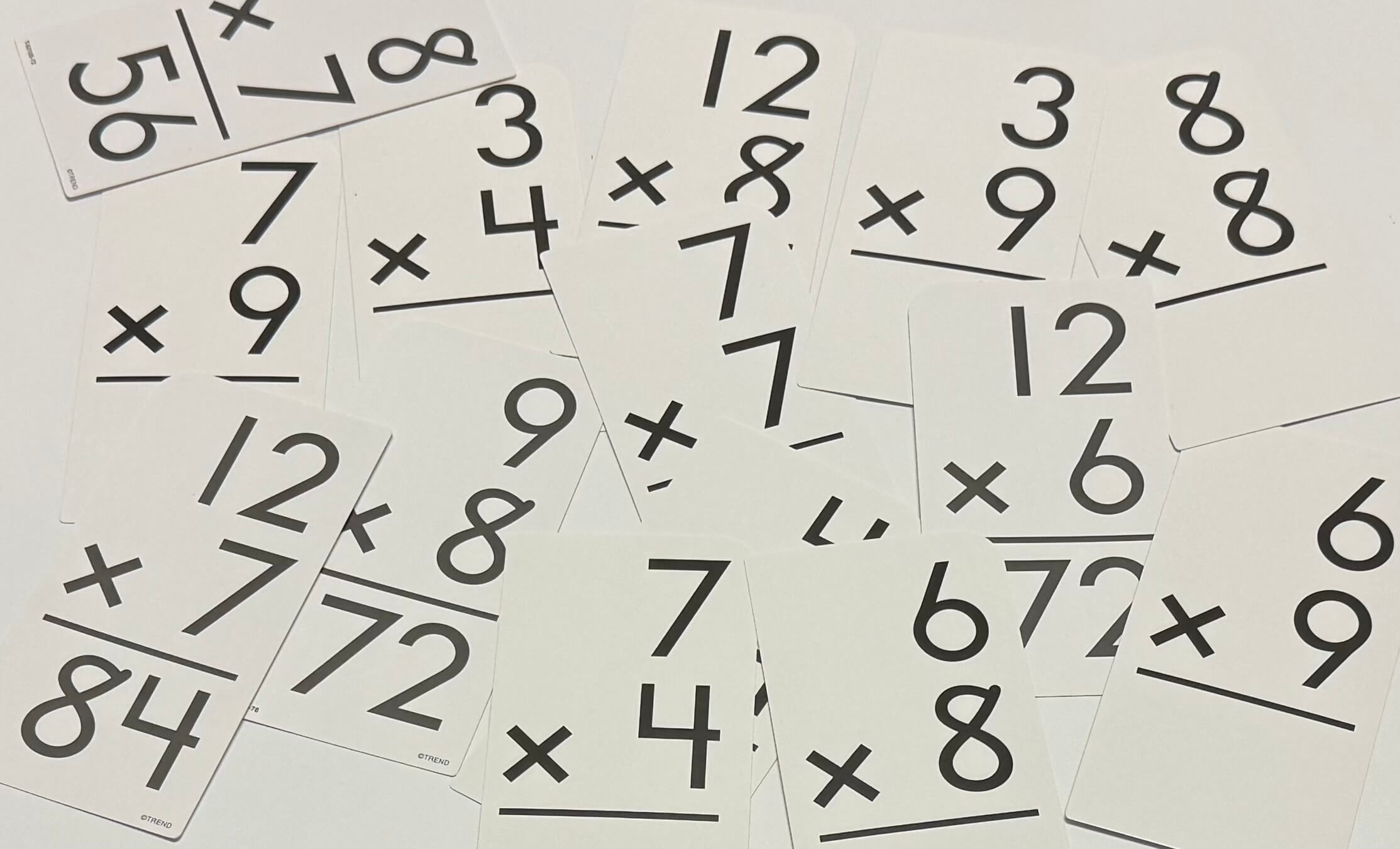
Memorizing math facts, such as multiplication tables, addition sums, and basic formulas, lays a strong foundation for mathematical proficiency and cognitive development. When students commit these facts to memory, they free up mental resources that would otherwise be spent on basic calculations, allowing them to focus on higher-order problem-solving and critical thinking. This fluency is like learning the alphabet before reading— automatic recall of facts like 7 × 8 = 56 or 12 + 9 = 21 enables students to tackle complex tasks, such as algebra or word problems, with confidence and efficiency. Studies show that students with strong math fact recall perform better on standardized tests and develop a deeper understanding of mathematical concepts, as they spend less time struggling with fundamentals.
Beyond academic performance, memorizing math facts fosters mental discipline and builds confidence in learners. The process of memorization strengthens neural pathways, improving overall memory and cognitive agility, which can benefit other subjects like science or language arts. As students master these facts, they experience a sense of accomplishment, reducing math anxiety and fostering a positive attitude toward the subject. For example, a child who can quickly recall 9 × 9 = 81 is more likely to approach math challenges with enthusiasm rather than dread. This confidence can translate into a growth mindset, encouraging students to persevere through difficult problems and view math as an accessible, solvable puzzle.
Finally, the benefits of memorizing math facts extend into everyday life and future careers. Quick mental math skills are invaluable in real-world scenarios, such as calculating tips, budgeting, or estimating measurements during home projects. In fields like engineering, finance, or technology, where rapid calculations and data analysis are common, fluency in math facts can give professionals an edge. Even in non-STEM careers, the discipline and problem-solving skills gained from memorizing math facts enhance logical thinking and decision-making. By investing time in mastering these basics, students equip themselves with a lifelong toolset that supports both practical tasks and intellectual growth.